Introduction
Calcium carbonate is one of the most widely used industrial minerals in the world. It is valued not only because it is cost-effective, but because it provides a broad range of functional advantages across many industries. From paints and paper to plastics, construction compounds, adhesives, sealants, and rubber, calcium carbonate plays a central role in improving product performance and formulation economics.
Manufacturers use calcium carbonate because it can improve brightness, control gloss, build film body, enhance smoothness, increase stiffness, and optimize raw material cost. Depending on the processing route, calcium carbonate is available in two major forms:
- Ground Calcium Carbonate (GCC)
- Precipitated Calcium Carbonate (PCC)
Each form serves specific industrial purposes and offers unique performance benefits.
What Is Calcium Carbonate?
Calcium carbonate is a mineral compound with the chemical formula:
CaCO₃
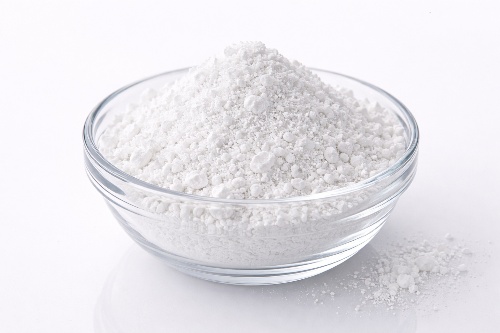
It is naturally found in limestone, marble, and chalk deposits. After processing, it is supplied to industry in controlled particle sizes and purities depending on the intended use.
It is available in a wide variety of grades:
- Fine micronized grades
- Coarser filler grades
- Coated grades for plastics
- High-brightness grades for paper and paint
- Slurry forms in some industrial processes
Key Properties of Calcium Carbonate
High Brightness
Calcium carbonate is widely used where whiteness and visual quality are important.
Benefits:
- Supports cleaner appearance in white products
- Improves brightness in paper
- Helps in decorative paints
- Contributes to light-shade formulation quality
Controlled Particle Size
The particle size of calcium carbonate strongly influences its performance.
Finer grades are useful for:
- Smooth paint finish
- Better coating quality
- Improved paper surface
- Better plastic dispersion
Coarser grades are useful for:
- Bulk filling
- Cost optimization
- Construction compounds
- Selected lower-cost industrial uses
Cost-Effective Functional Filler
Calcium carbonate is not only an economical mineral but also a functional one. It can replace costlier ingredients in a formulation while still contributing positively to product performance.
Easy Compatibility in Many Systems
Calcium carbonate works well in many formulation systems when the right grade is selected. In plastics, coated grades are often used to improve compatibility with the polymer matrix.
Calcium Carbonate in Paints and Coatings
Calcium carbonate is one of the most common minerals used in the paint industry. It acts as an extender, body builder, smoothness enhancer, and cost optimizer.
Main benefits in paint:
- Improves film body
- Helps control gloss
- Enhances smoothness
- Supports better dry finish
- Improves sanding in primers and putties
- Helps optimize titanium dioxide usage
- Reduces formulation cost
In decorative paints, calcium carbonate contributes to good appearance and economical formulation design. In putties and primers, it helps build mass and improve workability.
Types of paint applications:
- Interior emulsion paints
- Exterior wall coatings
- Primers
- Distempers
- Putties
- Texture coatings
- Industrial coatings
The correct particle size and brightness level must be selected according to the product segment.
Calcium Carbonate in Paper Industry
Calcium carbonate is also an essential mineral in papermaking.
It is used as:
- Filler
- Coating pigment
- Surface treatment component in selected grades
Functions in paper:
- Improves opacity
- Enhances brightness
- Reduces fiber cost
- Improves paper smoothness
- Supports printability
- Enhances surface quality
Both GCC and PCC are used in paper depending on machine configuration and target product quality.
GCC in paper:
Often preferred for economical filler and coating use.
PCC in paper:
Often selected when tighter control over particle shape and optical performance is required.
Calcium Carbonate in Plastics
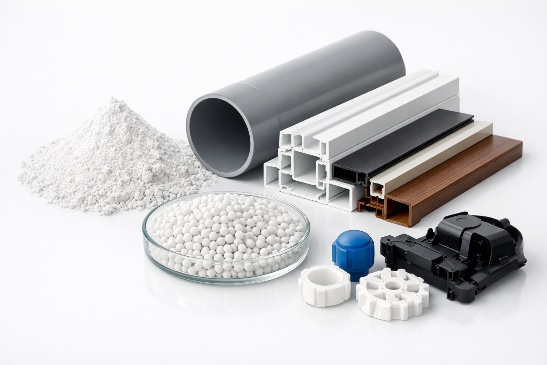
Plastic processors use calcium carbonate to reduce cost and improve physical performance in selected formulations.
Benefits in plastics:
- Improves stiffness
- Improves dimensional stability
- Reduces compound cost
- Supports processability
- Helps control shrinkage
- Improves surface finish in some products
Applications include:
- PVC pipes
- Profiles
- Films
- Compounds
- Masterbatches
- Injection molded products
Surface-treated calcium carbonate is especially important in polymer applications for better dispersion and compatibility.
Calcium Carbonate in Construction and Building Materials
In construction-related applications, calcium carbonate is used in:
- Wall putties
- Joint compounds
- tile adhesives
- sealants
- dry mix mortars
- construction chemicals
Benefits:
- Improves workability
- Adds bulk
- Enhances smoothness
- Supports better finish
- Helps control raw material cost
Calcium Carbonate in Rubber and Other Industries
Calcium carbonate is used in selected rubber applications as a filler to improve volume efficiency and formulation economics.
It is also used in:
- Adhesives
- Sealants
- Cables
- Flooring compounds
- Industrial putties
How to Select the Right Calcium Carbonate Grade
Important selection factors include:
- End-use industry
- Brightness
- Particle size
- Surface treatment
- Moisture level
- Purity
- Bulk density
- Dispersion behavior
- Oil absorption
Example:
A paint manufacturer may prefer a fine, bright grade.
A PVC processor may require surface-treated calcium carbonate.
A wall putty producer may prioritize filling efficiency and smoothness.
Common Problems from Incorrect Grade Selection
Using the wrong grade can result in:
- Poor dispersion
- Rough finish
- High viscosity
- Poor opacity balance
- Uneven surface
- Processing instability
- Low stiffness in plastic compounds
This shows why technical support from the supplier is important.
Conclusion
Calcium carbonate is one of the most versatile industrial minerals in use today. Its value goes far beyond being a low-cost filler. It improves brightness, surface quality, stiffness, formulation balance, and process economics across a wide range of industries.
For manufacturers, selecting the right calcium carbonate grade can directly improve production performance and customer satisfaction.