Introduction
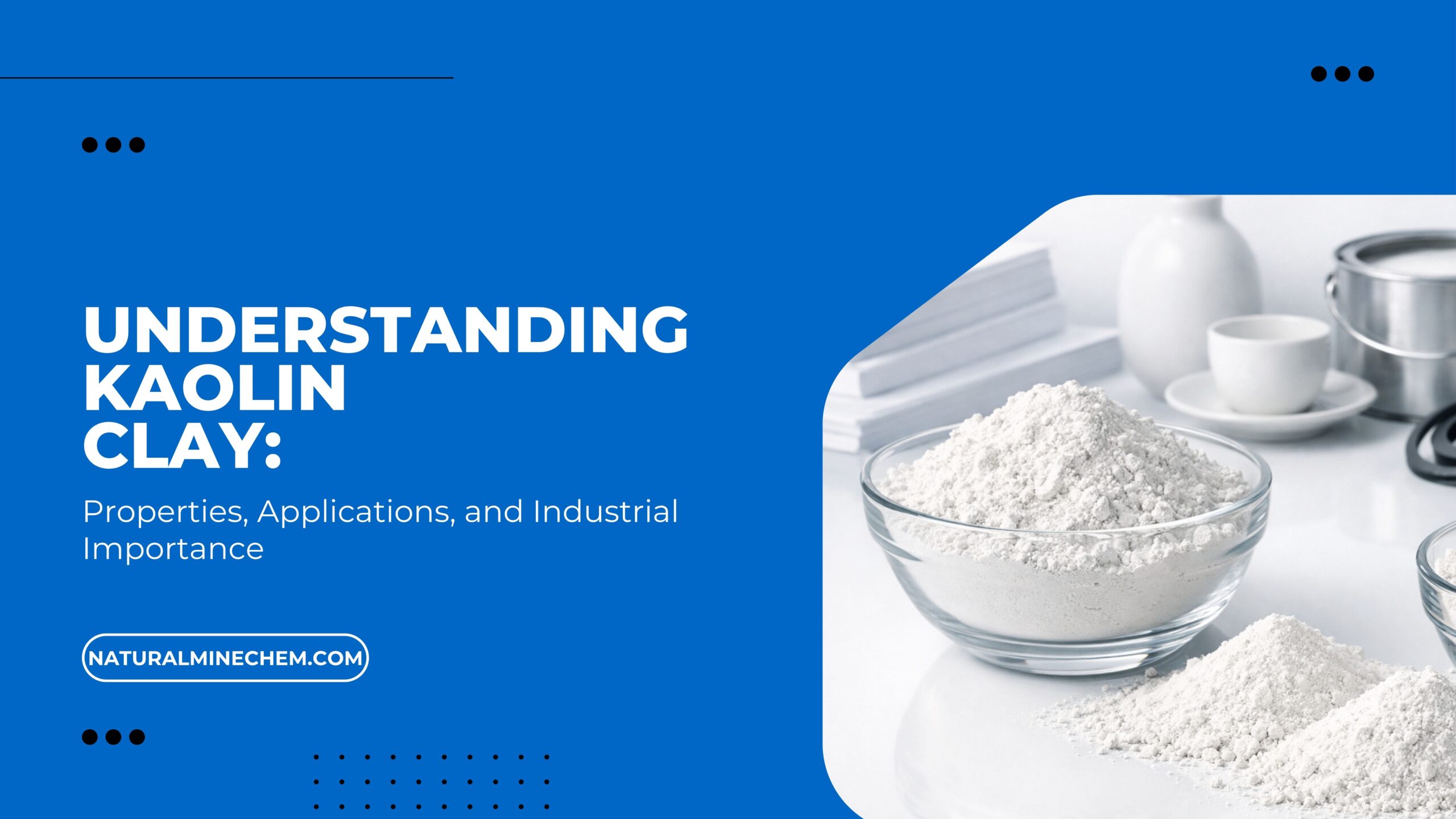
Kaolin clay is one of the most important industrial minerals used worldwide across multiple manufacturing sectors. Also known as china clay, kaolin is a naturally occurring hydrated aluminum silicate mineral formed by the weathering of feldspar-rich rocks over millions of years. Because of its fine particle size, controlled chemistry, brightness, softness, and plate-like structure, kaolin plays a valuable role in improving product quality, process efficiency, and formulation economics.
Industries such as paper, paint, coatings, ceramics, rubber, plastics, adhesives, and construction products depend on kaolin for different functional purposes. In some applications, kaolin is used to improve whiteness and surface finish. In others, it is used to enhance opacity, control rheology, improve durability, or act as a cost-effective functional filler.
For manufacturers, understanding kaolin is not just about knowing it is a white powder. It is about understanding how mineral properties influence process behavior, end-product performance, customer satisfaction, and overall production cost.
What Is Kaolin Clay?
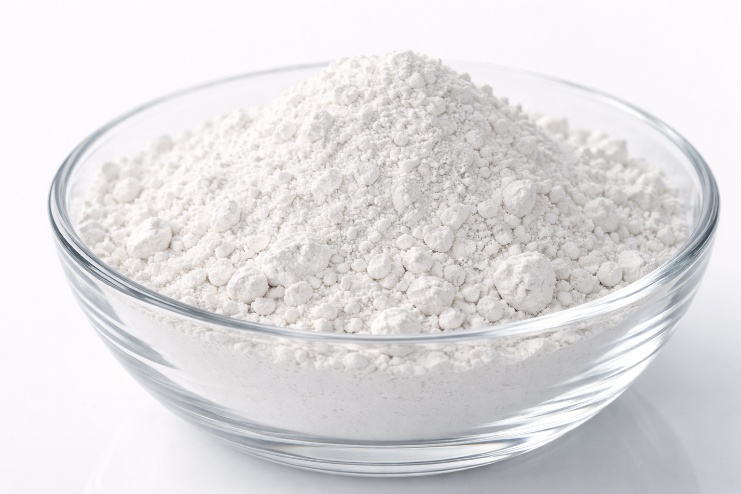
Kaolin is primarily composed of the mineral kaolinite, a layered silicate mineral with the chemical formula:
Al₂Si₂O₅(OH)₄
It is usually white to off-white in appearance, although the natural color may vary depending on the amount of impurities such as iron oxide, titanium oxide, mica, quartz, or organic matter present in the deposit.
Kaolin is processed into industrial grades by crushing, grinding, classification, and in some cases refining or surface treatment. The resulting material is supplied according to application-specific parameters such as:
- Brightness
- Particle size distribution
- Moisture content
- Residue
- pH
- Bulk density
- Whiteness
- Low iron content
- Dispersion properties
Because industries use kaolin differently, the grade selected for one sector may not be suitable for another.
Key Properties of Kaolin Clay
1. Brightness and Whiteness
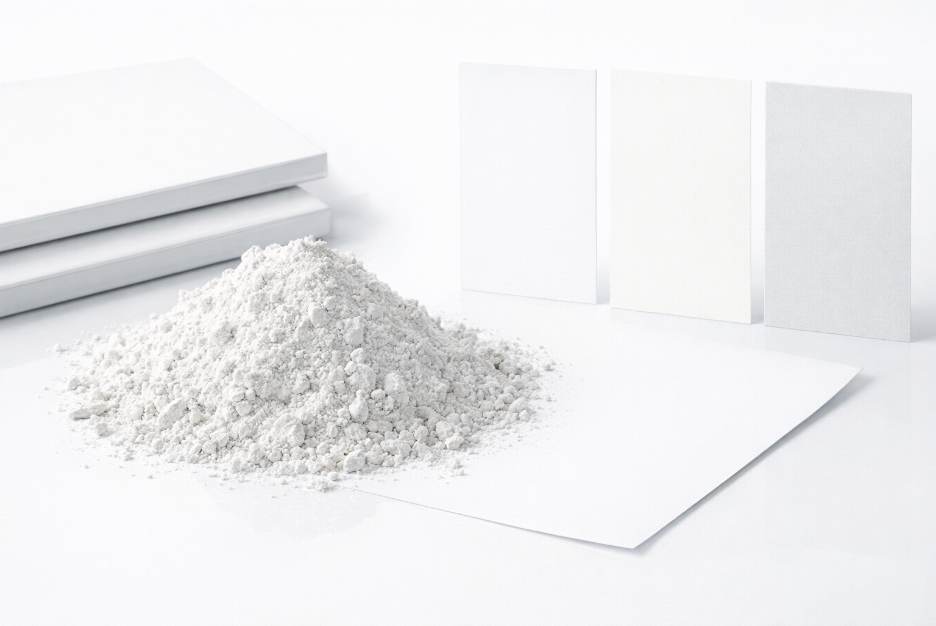
One of the biggest reasons kaolin is used in industrial formulations is its brightness. High-brightness kaolin is particularly important in industries where visual appearance matters, such as paper coating, decorative paints, ceramics, and white product formulations.
A brighter mineral helps improve the final product appearance and gives a cleaner, more premium finish.
- In paper, it improves whiteness and print quality
- In paint, it supports brightness and cleaner shade development
- In ceramics, it contributes to white firing bodies
- In plastics and rubber, it supports a cleaner visual appearance
2. Fine Particle Size
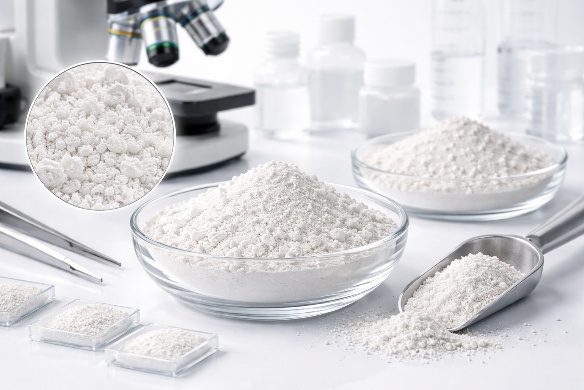
Kaolin is valued for its controlled particle size distribution. Fine particle size helps in surface coverage, smoothness, opacity development, dispersion, and filling efficiency.
Why it matters:
- Finer kaolin improves coating smoothness in paper
- It enhances paint film uniformity
- It supports better surface finish in ceramics
- It improves filler performance in polymers and rubber
A consistent particle size distribution is especially important for batch-to-batch formulation stability.
3. Plate-Like Particle Shape
Kaolin particles typically have a lamellar or plate-like structure. This gives the mineral unique functional characteristics.
Benefits of this structure:
- Improves surface coverage
- Helps form smooth coating layers
- Supports barrier properties in some systems
- Improves rheology and reinforcement behavior
This is one reason kaolin is preferred over some other filler minerals in certain formulations.
4. Chemical Inertness
Kaolin is relatively inert in many industrial systems. This means it generally does not react undesirably with other ingredients in a formulation.
Why this is useful:
- Easier compatibility in paints and coatings
- Better stability in rubber and plastics
- Lower risk of side reactions in complex systems
- More predictable production behavior
5. Low Abrasion
A good kaolin grade has low abrasion compared to harder minerals. This is very important in industries using continuous machinery.
Why it matters:
- Reduces wear on paper machine components
- Improves processing efficiency
- Lowers maintenance burden
- Increases equipment life
Kaolin in the Paper Industry
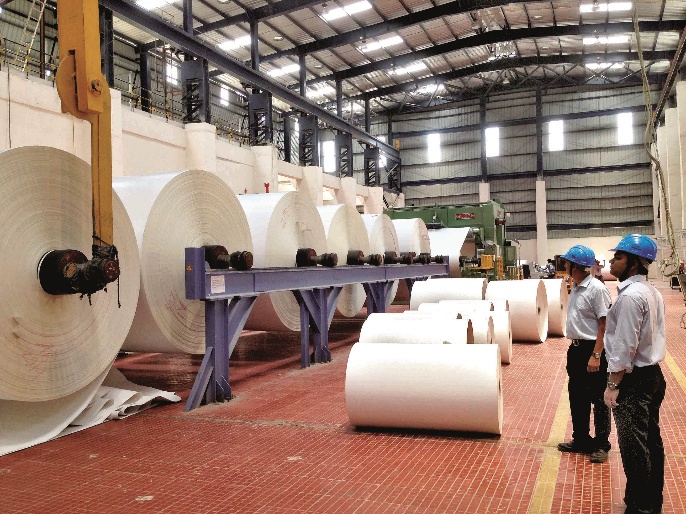
The paper industry is one of the largest consumers of kaolin. It is used mainly in two forms:
- As a filler
- As a coating pigment
Both applications provide important functional and economic advantages.
Kaolin as a Filler in Paper
When kaolin is added within the paper sheet as a filler, it replaces part of the cellulose fiber and improves several optical and printing properties.
Main benefits:
- Improves opacity
- Enhances brightness
- Improves printability
- Reduces raw material cost
- Improves sheet uniformity
- Supports better ink holdout
This is especially useful in writing, printing, and packaging grades where cost balance and visual quality both matter.
Kaolin as a Coating Pigment in Paper
In coated paper and duplex board, kaolin is applied as part of the coating layer on the paper surface.
Main coating advantages:
- Better smoothness
- Improved gloss development
- Enhanced print surface
- Better coating coverage
- More attractive visual appearance
- Improved print sharpness
In duplex board and premium coated grades, kaolin helps manufacturers achieve better branding and packaging presentation.
Kaolin in the Paint and Coatings Industry

Kaolin is widely used in decorative paints, industrial coatings, primers, putties, and selected texture finishes.
It acts as a functional extender mineral and contributes to both quality and cost optimization.
Functions of kaolin in paints:
- Improves smooth finish
- Supports opacity and hiding balance
- Enhances suspension properties
- Helps reduce formulation cost
- Improves brushing and application feel
- Assists in gloss and sheen control
Kaolin is especially useful in formulations where a balance between premium surface appearance and economic raw material usage is required.
In decorative paints:
Kaolin helps produce smooth wall finishes and supports whiteness and body.
In primers:
It improves sanding characteristics and dry film feel.
In industrial coatings:
It contributes to film reinforcement and surface quality.
Kaolin in the Ceramic Industry
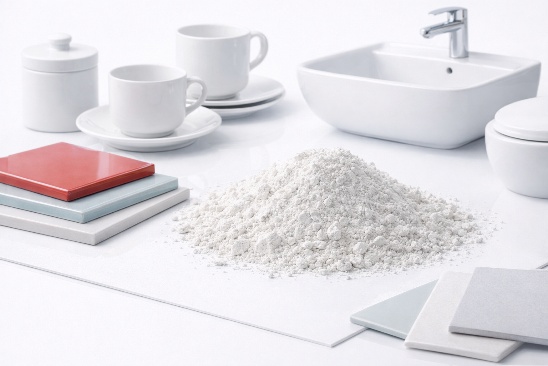
Kaolin is one of the most important minerals in ceramics. It is used in:
- Ceramic tiles
- Sanitary ware
- Porcelain
- Tableware
- Glaze systems
- Engobe applications
Key ceramic benefits:
- Provides plasticity during shaping
- Contributes alumina and silica
- Improves fired whiteness
- Supports body strength
- Helps in shaping and workability
- Assists in vitrification control
For ceramic producers, the purity and fired color of kaolin are highly important.
Kaolin in Rubber Industry
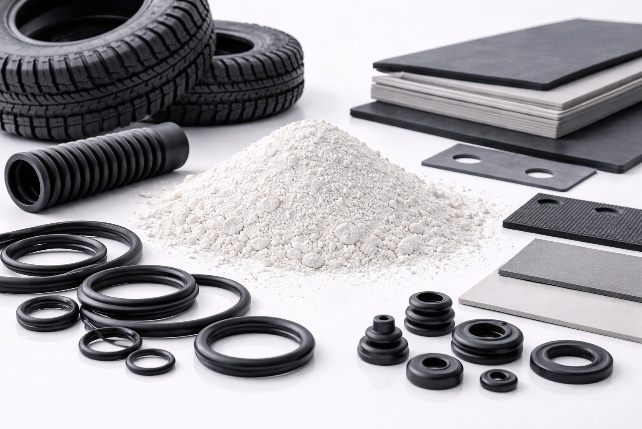
Kaolin is also used as a filler and reinforcing mineral in rubber formulations.
Main advantages:
- Improves dimensional stability
- Supports mechanical properties
- Helps optimize formulation cost
- Enhances surface finish
- Improves process consistency
In some rubber goods, kaolin is selected because it gives a good balance between cost and physical property improvement.
Kaolin in Plastics
In plastics, kaolin is used to improve stiffness, dimensional control, and surface finish, while also functioning as a cost-effective filler.
Benefits in plastics:
- Improves rigidity in some compounds
- Helps control shrinkage
- Improves surface appearance
- Supports process efficiency
- Contributes to formulation economy
It is used in selected thermoplastic and thermoset systems depending on application needs.
How to Choose the Right Kaolin Grade
Different industries require different kaolin grades. Important selection criteria include:
- Brightness
- Whiteness
- Particle size distribution
- Moisture level
- Iron content
- Residue
- pH
- Bulk density
- Dispersion performance
- End-use application
Example:
A paper coating customer may require very fine, high-brightness kaolin.
A rubber manufacturer may focus more on consistency and filling value.
A ceramic plant may prioritize purity and firing performance.
This is why grade selection should always be linked to application.
Why Consistency in Kaolin Supply Matters
Many production issues come not from using kaolin, but from using inconsistent kaolin.
Inconsistent mineral quality can lead to:
- Variation in brightness
- Coating instability
- Uneven viscosity
- Surface roughness
- Shade differences
- Lower production efficiency
- More batch corrections
A reliable supplier helps reduce these issues by ensuring controlled processing and stable specifications.
Conclusion
Kaolin clay is one of the most versatile and valuable industrial minerals used in modern manufacturing. Its performance benefits in paper, paints, ceramics, rubber, and plastics make it far more than just a white filler. It is a functional raw material that supports product quality, process stability, surface finish, and cost efficiency.
For manufacturers, the right kaolin grade can improve output quality and reduce production challenges. For buyers, choosing a trusted supplier is just as important as choosing the mineral itself.