Introduction
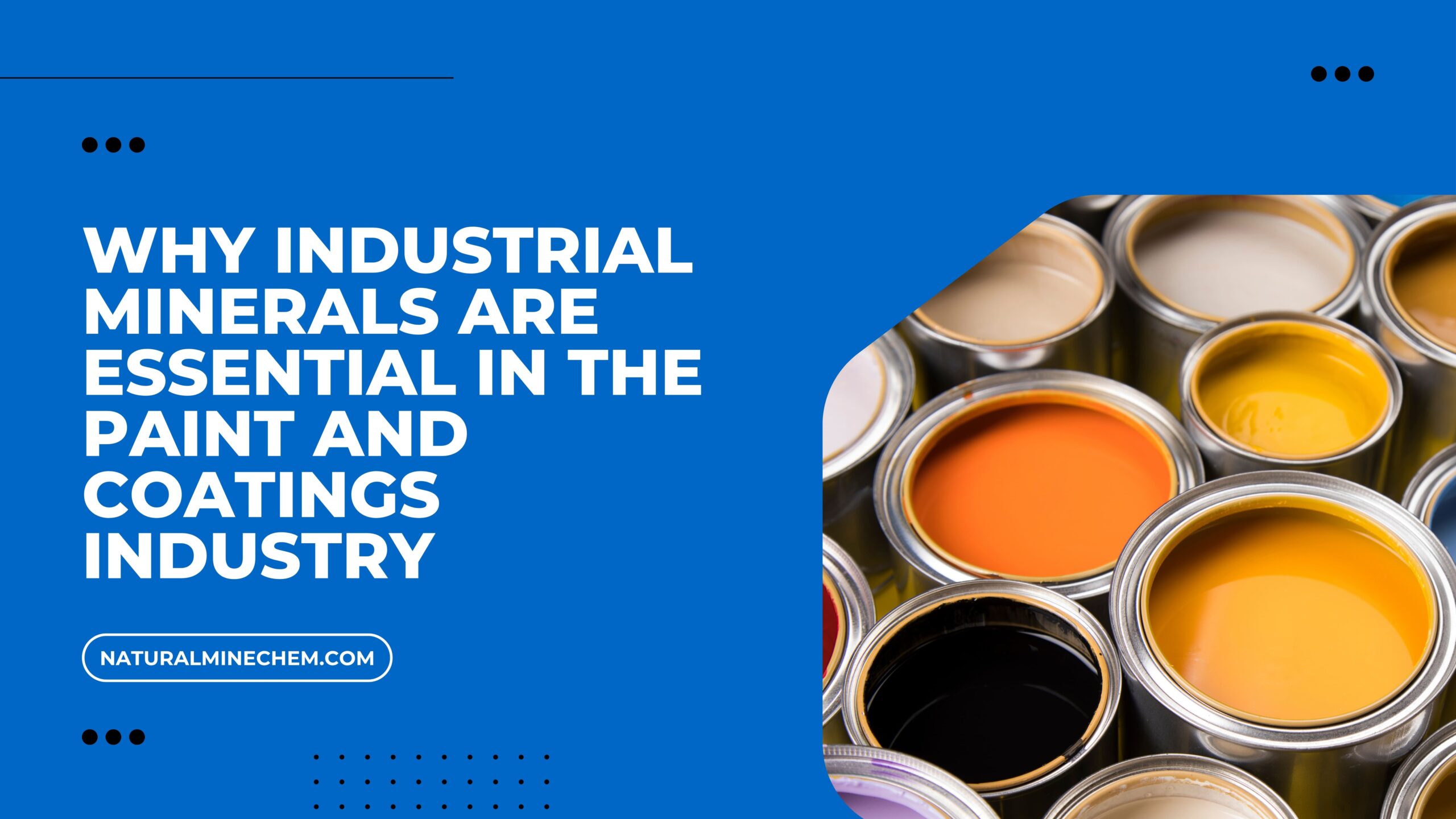
The paint and coatings industry depends on a carefully balanced combination of pigments, binders, additives, solvents, and industrial minerals. Among these, industrial minerals play a highly important yet often underappreciated role. They are not just used to occupy space in a formulation. They are selected to improve opacity balance, smoothness, gloss control, dry film strength, rheology, sanding performance, crack resistance, and cost efficiency.
Minerals such as kaolin clay, calcium carbonate, talc, dolomite, silica, and barytes are widely used in paint and coating systems. Each mineral contributes differently depending on its physical and chemical properties.
For formulators and buyers, understanding the role of industrial minerals is essential to developing coatings that are both high-performing and commercially viable.
What Do Industrial Minerals Do in Paints?
Industrial minerals in paints function as:
- Extenders
- Functional fillers
- Texture modifiers
- Rheology influencers
- Surface finish enhancers
- Cost balancing materials
The right mineral selection helps improve the final coating while maintaining economical formulation design.
Kaolin Clay in Paints
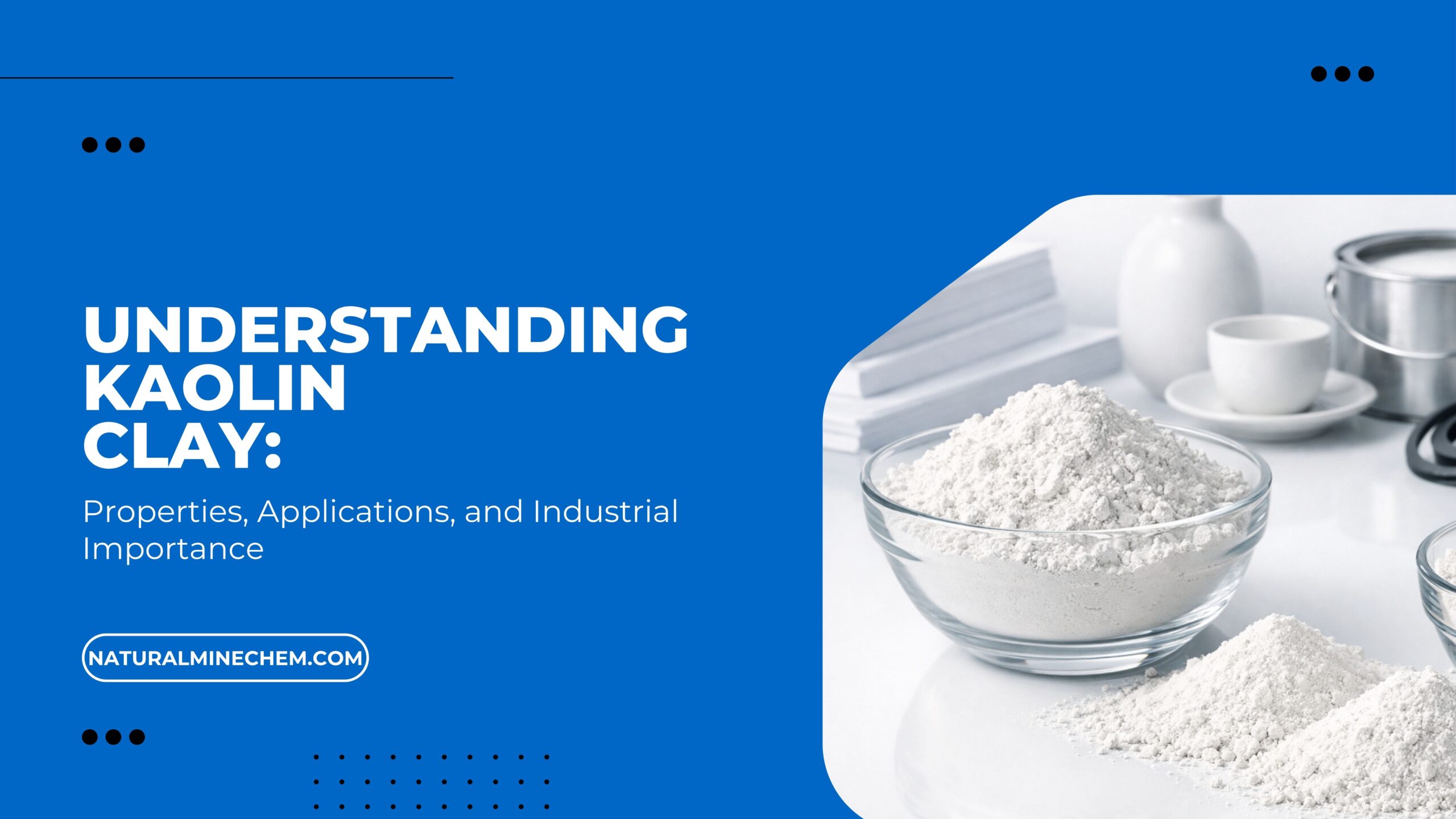
Kaolin is used in paints because of its fine particle size, brightness, and plate-like structure.
What kaolin does:
- Improves smoothness
- Supports opacity balance
- Enhances suspension behavior
- Helps control sheen
- Improves brushability
- Supports premium finish
Kaolin is especially useful in decorative wall paints, primers, and selected industrial coatings where a smooth finish is important.
Calcium Carbonate in Paints
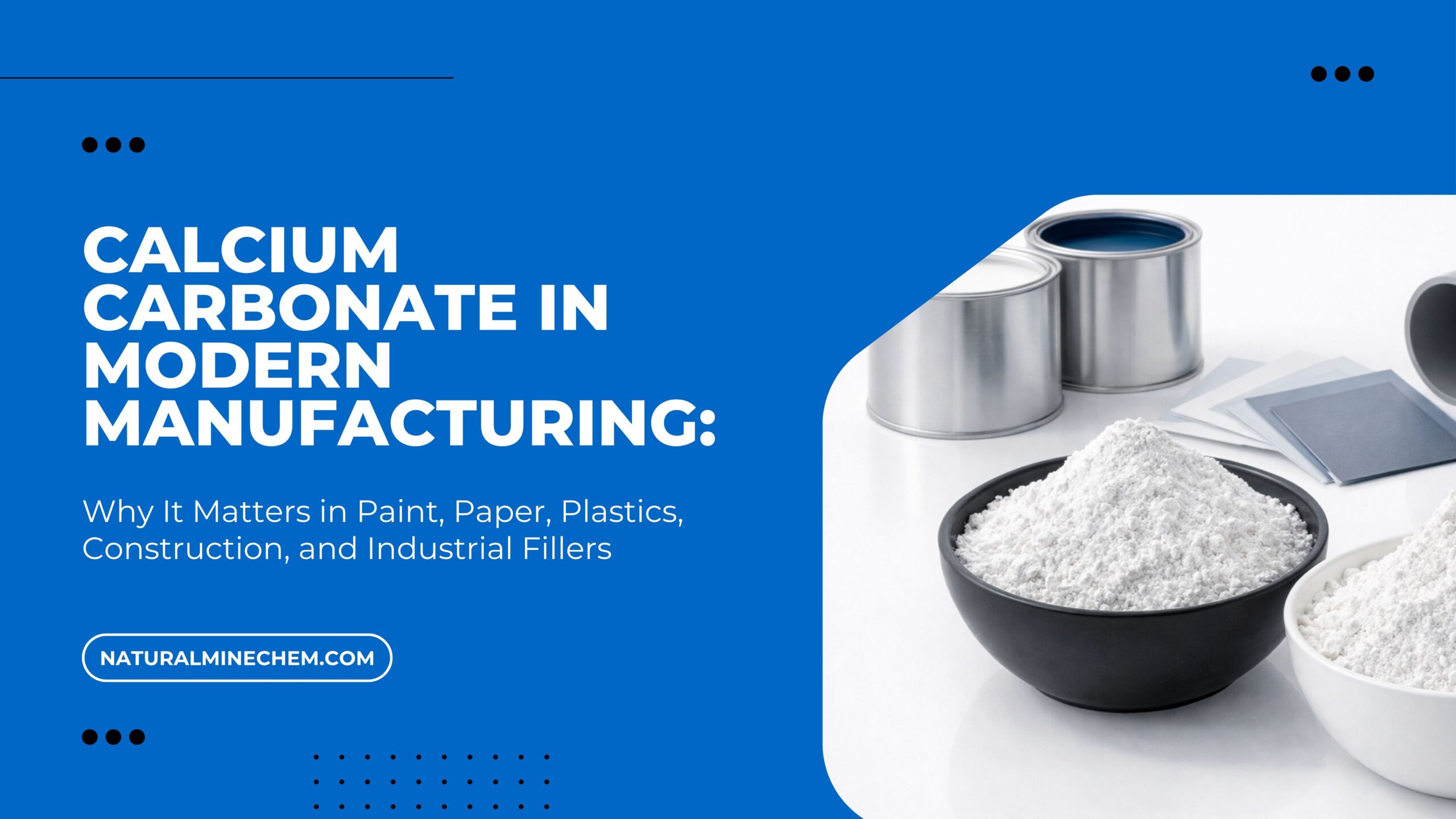
Calcium carbonate is one of the most widely used minerals in paint formulations.
Main functions:
- Builds body
- Enhances smoothness
- Controls gloss
- Improves dry hiding balance
- Supports sanding in primers and putties
- Helps reduce overall formulation cost
Because it is available in different particle sizes, it can be used in multiple paint segments.
Talc in Paints
Talc is a platy mineral used in coatings for functional performance.
Benefits:
- Improves smoothness
- Enhances anti-cracking performance
- Improves sanding
- Helps in suspension
- Supports matte finish control
It is commonly used in primers, wood coatings, industrial coatings, and putties.
Dolomite and Silica in Coatings
Dolomite:
Often used where filler efficiency and hardness balance are required. It can improve film strength and contribute to body.
Silica:
Used in texture coatings and industrial systems where hardness, abrasion resistance, and texture development are important
How Minerals Affect Paint Performance
1. Opacity and Hiding
Although titanium dioxide is the main pigment for hiding, minerals help optimize the structure of the paint film. This indirectly supports opacity efficiency.
2. Surface Finish
Fine minerals improve the smoothness and feel of the final paint film, giving better visual appeal.
3. Rheology and Workability
Minerals affect viscosity, sag resistance, brushing feel, roller application, and suspension stability.
4. Dry Film Properties
Different minerals influence hardness, flexibility, crack resistance, scrub resistance, and sandability.
5. Gloss and Matte Control
Minerals help formulators create gloss, semi-gloss, eggshell, or matte finishes depending on market need.
6. Cost Efficiency
Minerals help reduce formulation cost without fully sacrificing performance, which is important in competitive paint markets.
Where Industrial Minerals Are Used in Paint Segments
- Interior emulsions
- Exterior emulsions
- Primers
- Distempers
- Putties
- Texture coatings
- Waterproof coatings
- Industrial coatings
- Powder coatings
- Protective coatings
Each segment requires a different mineral package.
Why Supplier Consistency Matters in the Paint Industry
Inconsistent minerals can create:
- Shade variation
- Settling issues
- Rough finish
- Batch variation
- Application complaints
- Poor film formation
A reliable mineral supplier supports quality stability and production control.
Conclusion
Industrial minerals are not secondary ingredients in paint. They are core performance drivers that influence quality, application behavior, appearance, and formulation economy. Choosing the right mineral grade helps paint manufacturers build better products and stronger market trust.